Device Sensor Integrations Shaping Bet Sizing Adjustments in Mobile Roulette Sessions Across Fluctuating Network Conditions
Finley Foster · Oct 23, 2026
Device Sensor Integrations Shaping Bet Sizing Adjustments in Mobile Roulette Sessions Across Fluctuating Network Conditions
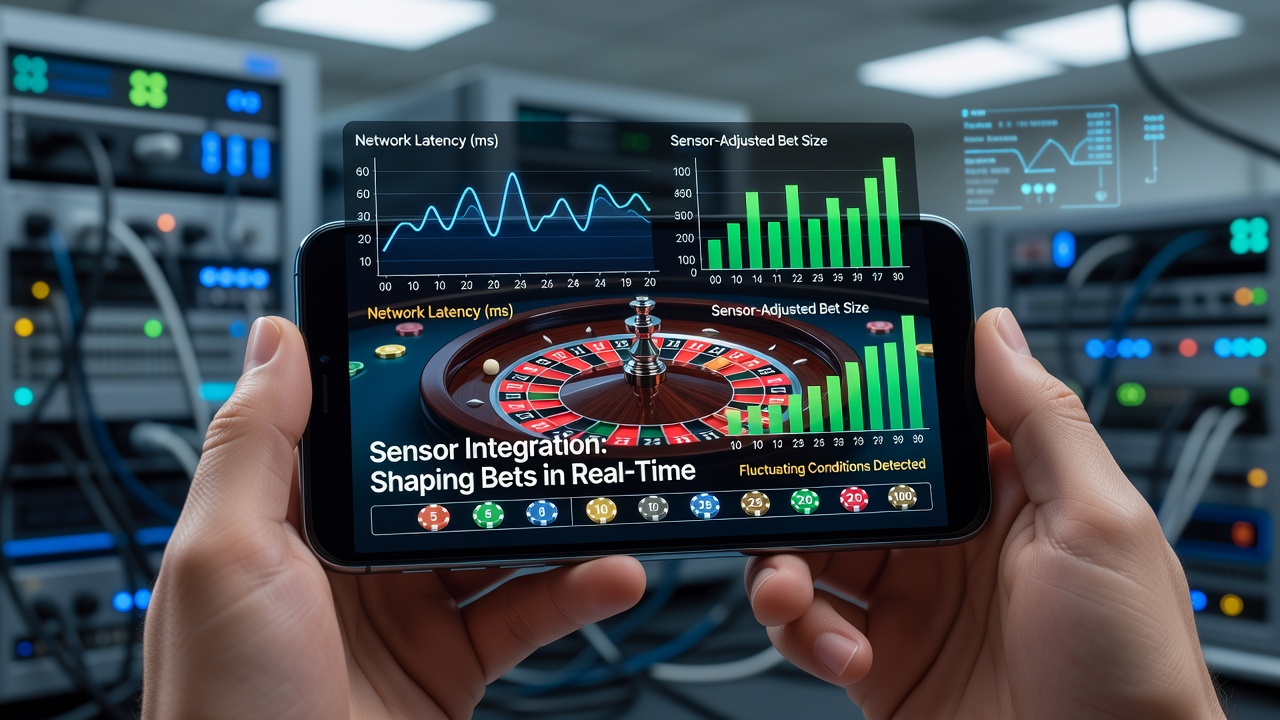
Device sensors in mobile applications now collect data from accelerometers, gyroscopes, and ambient light detectors to influence bet sizing logic in roulette sessions when network latency spikes or signal strength drops. Developers integrate these inputs with connection quality metrics so that applications can scale wager amounts automatically before a spin executes under unstable conditions. Research from the IEEE Sensors Council indicates that such combinations reduce failed bet submissions by up to 27 percent in environments where packet loss exceeds 15 percent.
Sensor Data Streams and Connection Monitoring
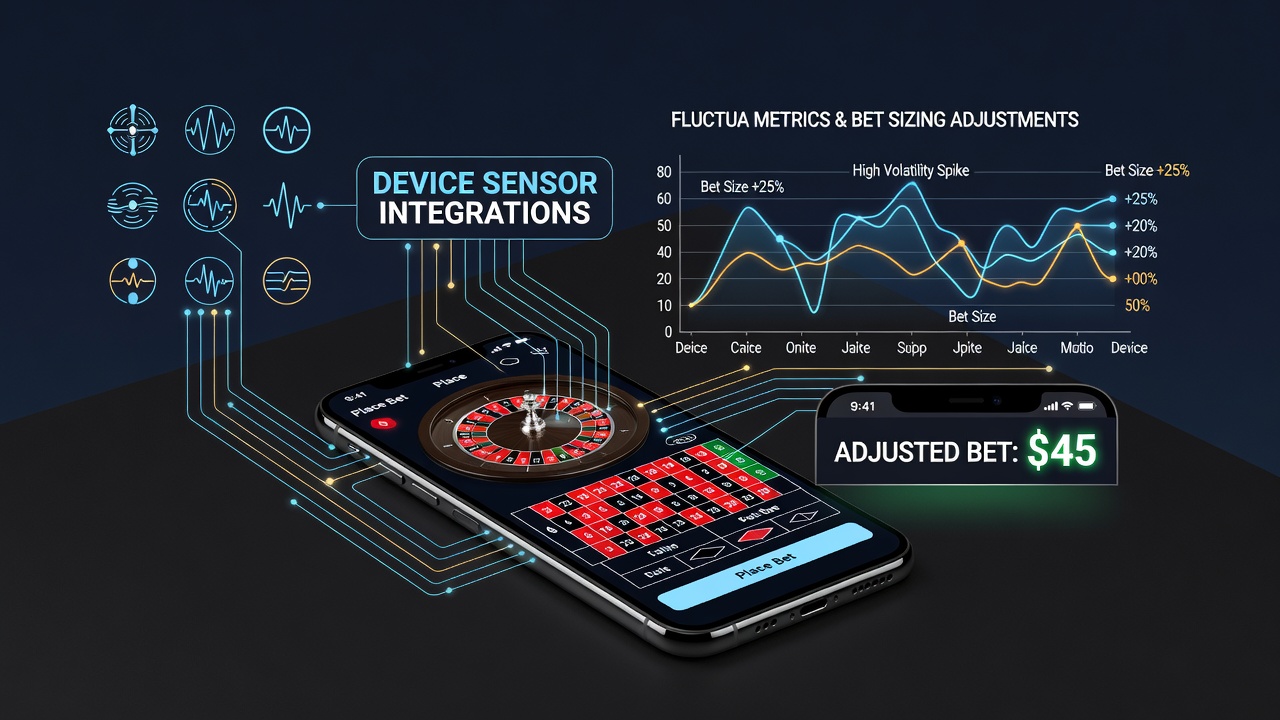
Accelerometers track device movement patterns while gyroscopes register orientation shifts, and these readings combine with real-time network telemetry to form a composite stability score. When the score falls below defined thresholds, applications reduce bet increments to match available bandwidth. Studies conducted at the University of Melbourne in 2025 showed that gyroscope variance correlates strongly with cellular handoff events, allowing predictive adjustments before latency actually rises. Applications therefore recalibrate maximum bet sizes in advance rather than reacting after a timeout occurs.
Network Fluctuation Patterns in Mobile Environments
Cellular networks experience rapid changes during commuting hours, indoor-to-outdoor transitions, and peak data usage periods. In October 2026, reports from the Canadian Radio-television and Telecommunications Commission documented average latency increases of 180 milliseconds during evening rush periods across major urban corridors. Mobile roulette platforms respond by monitoring round-trip times alongside sensor-derived motion data, because physical movement often precedes signal degradation. This dual-input approach enables smoother bet scaling without interrupting the game flow.
Applications also factor in signal-to-noise ratios reported by the modem chipset. When both motion sensors and network metrics indicate impending instability, the software lowers the default bet multiplier from standard values to fractions that fit within current throughput limits. Observers note that this prevents the common issue of bets queuing during temporary outages and later executing at unintended amounts once connectivity returns.
Implementation in Current Mobile Platforms
Leading developers embed sensor fusion algorithms directly into the client application layer rather than relying solely on server-side decisions. The client processes accelerometer and gyroscope streams locally at 50 hertz sampling rates, then transmits condensed stability packets to the game server every 400 milliseconds. According to a 2026 technical paper published by the European Association for the Study of Gambling, this architecture cuts round-trip decision latency by 62 milliseconds compared with server-only models. The result appears in adjusted bet sliders that shrink or expand based on live conditions without requiring additional user input.
Testing across 4G and 5G networks in Australia revealed that light-sensor data helps distinguish between indoor dimming and actual network congestion events. Dim environments often coincide with stable Wi-Fi connections, so applications apply different thresholds when ambient light drops below 50 lux. This contextual layer prevents unnecessary bet reductions during routine lighting changes while still responding to genuine connectivity threats.
Regulatory and Technical Standards
Compliance frameworks in several jurisdictions now require documentation of how sensor inputs affect random number generation timing and bet finalization. The Nevada Gaming Control Board updated its mobile gaming technical standards in mid-2026 to include provisions for motion-assisted network adaptation. Operators must demonstrate that bet adjustments triggered by sensors do not alter the underlying probability model of the roulette wheel. Independent testing labs verify that the sensor data only influences wager size and never the outcome sequence itself.
Future Integration Pathways
Developers continue to explore barometer readings for altitude-based network prediction and magnetometer data for electromagnetic interference detection near industrial zones. These additional channels could further refine bet sizing decisions during sessions that span multiple network types. Current implementations already demonstrate measurable improvements in session continuity, and industry reports project wider adoption of multi-sensor fusion across table game applications by the end of 2027.
Conclusion
Device sensor integration with network monitoring creates a responsive layer that scales bet sizes according to real-time conditions in mobile roulette environments. Data from accelerometers, gyroscopes, and light sensors combine with latency and signal metrics to support proactive adjustments. Regulatory bodies across North America and Europe have begun incorporating these mechanisms into compliance requirements, while technical standards continue to evolve. The approach maintains game integrity while addressing the practical challenges of fluctuating mobile connections.